
Hand writing the word REACH on chalkboard, social media concept

Successful leave management approaches are about more than policies and plans. They differentiate organizations. And for today’s workforce, which is increasingly knowledgeable about what is possible and legally required, employers are reaching beyond traditional benefit portfolios to attract and retain top talent.  

This is essential considering that these employees want (and demand) different types of support from employers during different stages of their lives. And oftentimes those needs fall outside the traditional realm of standard benefit packages that include medical, dental, and vision insurance. Employers are responding to this demand. And, in some instances, they are preempting it.  

It takes courage to break out of the prescribed benefits path and embrace what we’re calling the “Core Four,” which adds paid leave benefits to the aforementioned, traditional benefits. It’s easier to follow in well-worn footsteps though not half as much fun. And the potential rewards for breaking the benefits mold — which is long overdue — are enormous. 

DMEC data shows progress in this realm for employers of all sizes. There’s been an evolution in paid leaves as well as innovation, flexibility, and inclusiveness in employers’ time-off practices as outlined in the 2024 DMEC Plan and Policy Design executive summary report. More employers are continuing health benefits during leave, and a majority go beyond state mandates, which demonstrates a strong commitment to employee care during critical times.1

We saw a significant increase in the number of employers offering paid parental leave from 2022 to 2024 with 95% offering full pay. That employee support does not yet extend beyond parental benefits but there are glimmers on the horizon as more employers recognize increasing workforce diversity and a need to ensure benefits support claims of equity and inclusion.  

True leadership in this realm goes beyond offering generous plans and policies. Implementation is the true sweet spot. It can, however, be an expensive fumbling ground if employees do not know about available options and there is a stigma to using those benefits.  

The chasm between assumption and reality here is wide but manageable for employers of all sizes that invest in education and training for managers and supervisors and set, assess, and revise their benefit policies on a regular basis. Employers that use data to guide benefit plan and policy development, benchmark offerings against market data, and assess whether the benefits meet employees’ needs will always be ahead of the herd.  

And as the industry becomes savvier about collecting, assessing, and using data in this way with tools like DMEC AbsenceExemplar® benchmarking dashboards, we see improvements and innovation. Benchmarking does not always show a need for a greater investment of funds; it may show an opportunity to invest differently to achieve more equitable and supportive outcomes.  
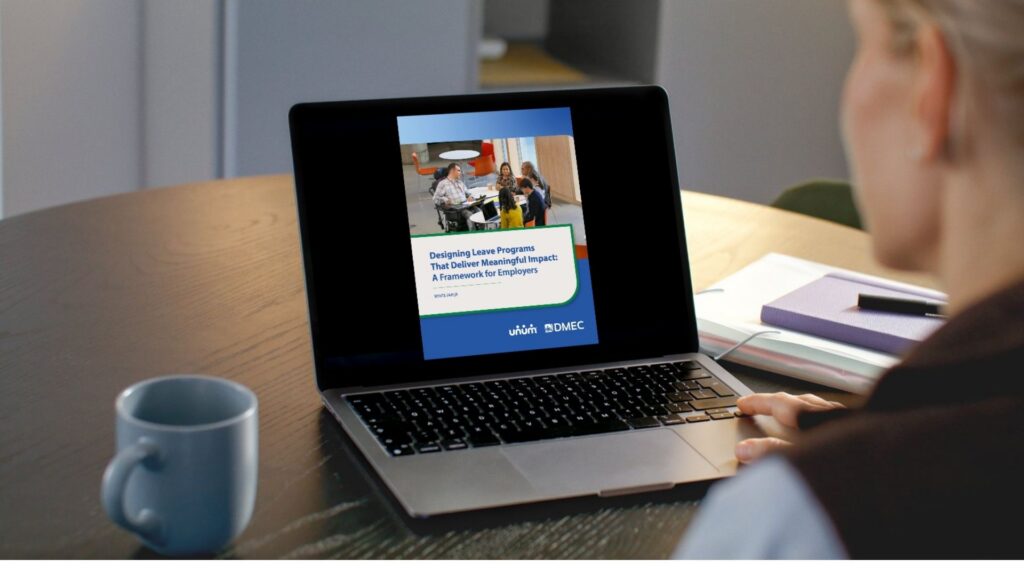
More professionals understand that leave management is no longer just about policies and plans. It’s about how we care for our people, protect productivity, and lead the future of work.

Extended Influence 

In fact, employers are testing the waters with creative approaches to company paid leaves that encourage employees to seek support during stressful times. These buckets include compassionate leave, caregiver leave, and menopause leave from employers that recognize that investing in employees pays off with recruitment as well as retention.  

It’s an approach that begins with industry data sets for organizations of similar sizes and industries to build a business case.2
And it is infused with company-specific benchmarks to ensure benefits align with employee needs that are unique to each and every organization. For example, data has shown employers that they can pare back on legacy programs, due to lack of employee use, which provides leeway to test leave programs that demonstrate support for all employees. Data can fuel reinvention of plans and polices so they resonates with an increasingly diverse workforce.  

It is encouraging to see employers push boundaries with paid leaves, yet future success will rely on developing a broader strategy for programs that include planning to avoid overtaxing employees who cover for coworkers on leave.  

The need for this type of holistic strategy is illustrated by the second annual Time Away Study conducted by Aflac.3
The study documents the adverse health effects on staff when employers do not consider a time-away approach as part of their plans and policies — from the deterioration of mental health to the development of serious health issues.  

We know that compliance matters. Employers juggle hundreds of leave laws and concurrency questions every day. But compliance alone isn’t enough.  

We explored this topic during a 2024 DMEC Annual Conference panel with Aflac and Prudential executives. The teams conducted studies on the impact of paid leave in the workplace, which provided data on adverse health effects reported by employees covering for colleagues. One of many takeaways was that employers need to think more holistically about leave management, which is emphasized in the second report from Aflac. 

A Bigger Picture 

While it can be overwhelming to consider the seemingly disparate pieces to leave management, especially in nonintegrated environments, these are all components of a larger whole that influence long-term success.  

Talking about the bigger picture of leave management — and how employers ensure all employees are considered — uncovers solutions for all parties.  

Moving forward we must be more introspective about the correlation between employee time away, productivity, and health and wellness, which represents the total cost of your program. It’s information that validates the need to bring leave management strategies full circle. And it should emphasize the need to consider how we support the teams that must make up work done by employees on leave. We don’t want anyone to feel left behind. Yet they do.  

We are in a position to effect positive change as we embrace an expanded purview for leave management that encompasses all aspects of accommodations and leave. This includes the time before the need for a leave as well as an employee’s return to work. There are an increasing number of options to automate some of this planning, to improve efficiency when it comes to communication, and to ensure a smooth transition for the employee who needs a leave of absence and their colleagues.  

Investigating those options and recognizing a mutually beneficial path forward will become increasingly important for employers of all sizes and industries. We stand at the edge of transformation that can enhance the employee experience and help improve compliance. More professionals understand that leave management is no longer just about policies and plans. It’s about how we care for our people, protect productivity, and lead the future of work. And that is the first step toward developing successful, holistic programs.  

  1. DMEC. Reshaping the Future of Benefits. New DMEC benchmarking report identifies plan and policy trends from hundreds of employers. Retrieved from https:/dmec.org/wp-content/uploads/Executive-Summary_2024-DMEC-Benchmarking-Report.pdf  
  2. DMEC. AbsenceExemplar® Benchmarking. Retrieved from https://dmec.org/dmec-absenceexemplar-benchmarking-dashboards/  
  3. Aflac. Time Away Study. Retrieved from https://www.aflac.com/docs/brokers/bsp-vas/lads-time-away-study-executive-summary.pdf