The future of the employee leave experience
Use practical approaches from employers, insurers, and service providers to reduce friction and make leave easier for employees to understand and navigate.



Use practical approaches from employers, insurers, and service providers to reduce friction and make leave easier for employees to understand and navigate.
The 2026 DMEC Salary Survey gives you current compensation data from 592 professionals across employer organizations, carriers, consultants, and the public sector.
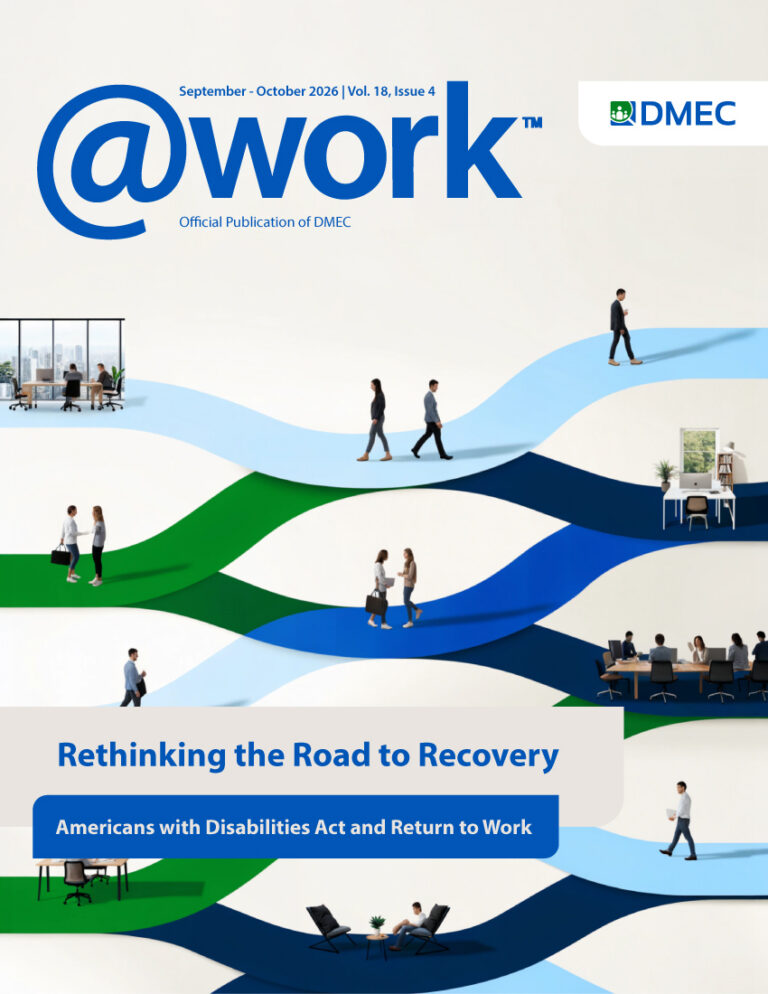
What does it take to support employees when illness, injury, or changing circumstances affect their ability to work? In this issue of @Work magazine, accommodation and leave management professionals examine that question from different points in the employee journey, from staying at work during recovery to navigating accommodations and planning a successful return after leave. Fred Schott, in conversation with Dan Jolivet, Les Kertay, and Mike Lacroix, examines the role work can play during recovery and why stay-at-work programs remain underused. Rachel Shaw looks at temporary modified light duty, while Gage Koeller and Kerri Wizner analyze 10 years of claims data to track changes in return-to-work durations. Jess Dudley considers the role of empathetic leadership during return to work. Tori Weeks and Wendy Coduti examine how employers can prepare for the effects of natural disasters on employee health and work, and Kelly Woodbridge looks at how National Disability Employment Awareness Month can build a culture of disability inclusion that lasts beyond October. The issue also looks at managing accommodations for remote employees, supporting neurodivergent employees, navigating the overlap between the PWFA and ADA, and what happens when an employee can't return to the same work in the same way.




There are many actions employers can take to support their neurodivergent employees. Gaining an understanding of both neurodiversity and neurodivergence is the first step toward learning how to support them.
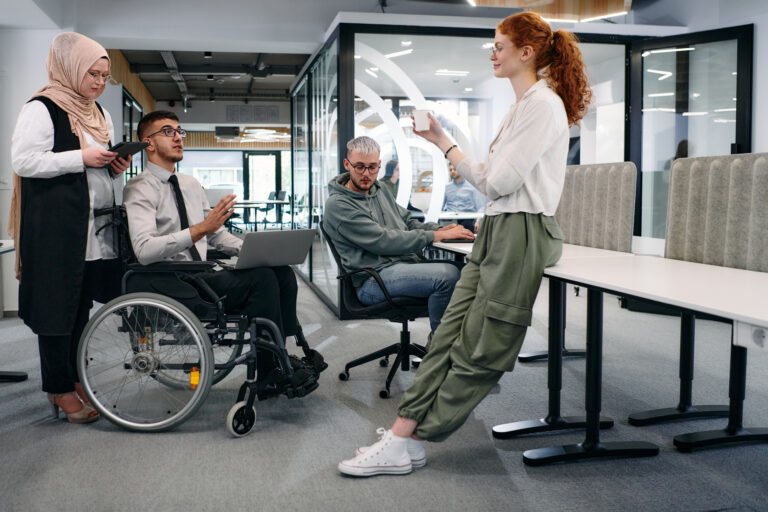
For years, return-to-work programs have focused on one central question: how do we help employees come back safely after an illness or injury? A growing body of evidence is pushing accommodation and leave management professionals to ask an earlier question: did the employee need to leave work completely in the first place?